


In my neighborhood the birds begin to chirp when the sun rises and they continue to chirp until it sets. Go on a walk and you’ll be greeted by sapling trees and you’ll also see a stray forgotten chip bag on a neighbor’s lawn and forgotten candy wrappers on another. Keep walking and the sidewalk will stop. At this point you’re forced to walk in the street on top of shards of glass from a broken beer bottle or two. If you keep going you’ll make it to one of the most visited walking trails in the city. This trail is distinct from its surroundings. It is clean. There are no stray bottles or bags of chips here and there. Instead you’ll see miles and miles of mature trees, hills, butterflies, red birds, creeks, and lots of nature lovers. The trail almost seems out of place. Like, Did they make a mistake? Is this trail supposed to be in this neighborhood?
In this post I’d like to discuss the cultural context of the city where I live and then I’d like to discuss what I think could be done to improve it. When I think of the word improve I immediately think of building something better than what existed before. Dictionary.com defines it as: “to bring into a more desirable or excellent condition.” I’d like to discuss my ideas for how the city of Dallas, specifically South Dallas, could become more desirable.
Part I: Cultural Context – The Impact of De Facto Segregation on Quality of Life in Dallas
I live in Dallas, Texas. Dallas is a de facto segregated city. De facto segregation is when people separate themselves in practice, not by law. Even though it is not mandated, there are areas of the city where residents are predominantly Hispanic, areas that are predominantly Black American, areas that are predominantly Asian Indian, areas that are predominantly African, and areas that are predominantly White American.
I often wonder if this de facto segregation is by design. It is well known that income dictates where a person lives in Dallas. I wonder if housing prices are the modern tool being used to keep everyone separated. The 2022 article, “Zoned Out in Texas: How One Mother in Texas Overcame Dallas’s Discriminatory Housing Laws” sheds light on the history of the use of redlining to keep certain races in different zones. That history seems to still be ingrained in how we live today.
Several years ago I remember a colleague telling me about a book about the history of Dallas that had been taken out of circulation. The book is called The Accommodation and it is written by a journalist named Jim Schutze. It’s about the history of racism in the city and what has been done over time to preserve the white status quo. My colleague told me I should read it because I shared with her that it’s wild to me that I can feel there are certain parts of the city I’m not welcome even if it isn’t explicitly said. It’s felt in the looks I receive when I walk into the restaurant. It’s felt in how much I am watched when I am shopping in the boutique. It’s felt when I am taking a walk in the neighborhood that I was invited to for a baby shower. It’s wild that this is still a thing albeit an unspoken thing. We seem to all play our parts by going back to our part of town when it’s all said and done.
Part II: Things that Would Improve My Community
Having discussed the cultural context of the community where I reside, I’d now like to address things I would do to improve it. First, I would replace several fried chicken spots with healthier eating options such as juicing bars, smoothie shops, and fast food chains that offer non-processed food options. It’s frustrating that we have to drive 20-30 minutes to find healthy food options. I’m pretty sure this is by design, too. The term ‘food desert’ came to mind as I was closing this paragraph.
A food desert is an area, often in a low income neighborhood with limited or nonexistent access to affordable and nutritious food. This is particularly true for residents without reliable transportation. It can lead to potential health issues. This is evident in my part of town. According to the Vice President of Community Impact for United Way of Metro Dallas, Ashley Douglas, in Southern Dallas there is a 20 year less lifespan than what is seen in the northern counterparts of Dallas. I don’t think this is a coincidence seeing as the neighborhood is composed of predominantly Black American and Hispanic working class individuals.
In addition to creating a food oasis, I’d also improve our park and recreation areas. The play equipment in our neighborhood park is falling apart. I think this discourages parents from bringing their children to play. We often drive 20 minutes to a city called Grand Prairie to take our children to play in their community park. The play equipment at the Grand Prairie park is vastly different from the equipment offered in our community. See the contrast in the play areas in the pictures below.
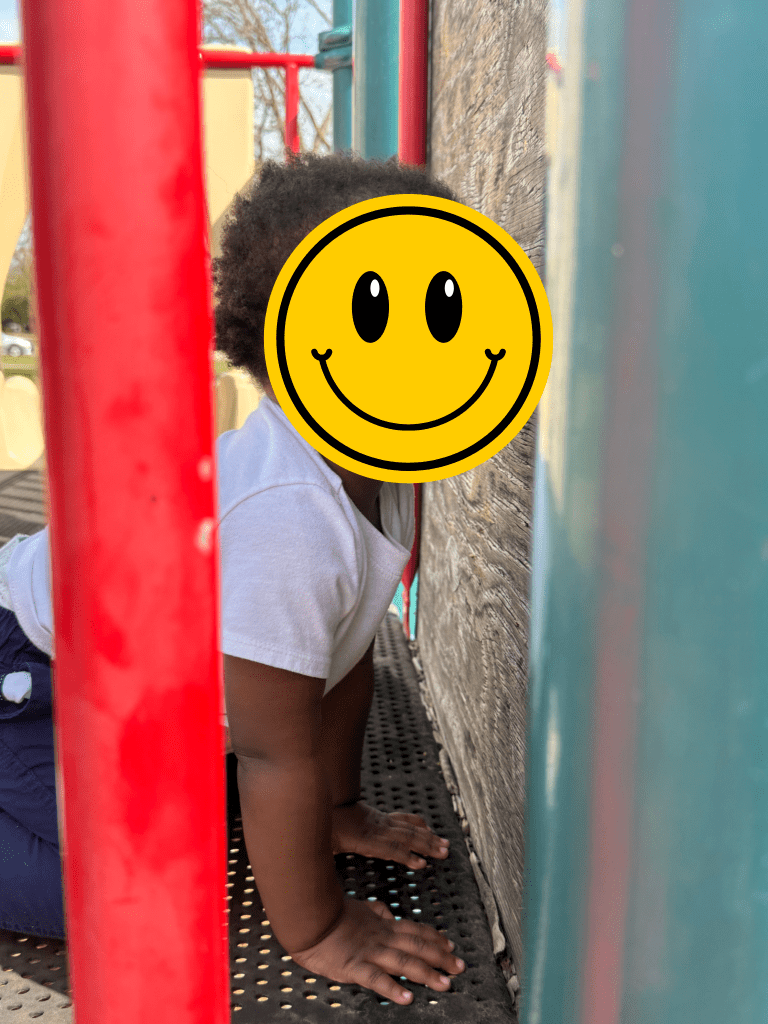
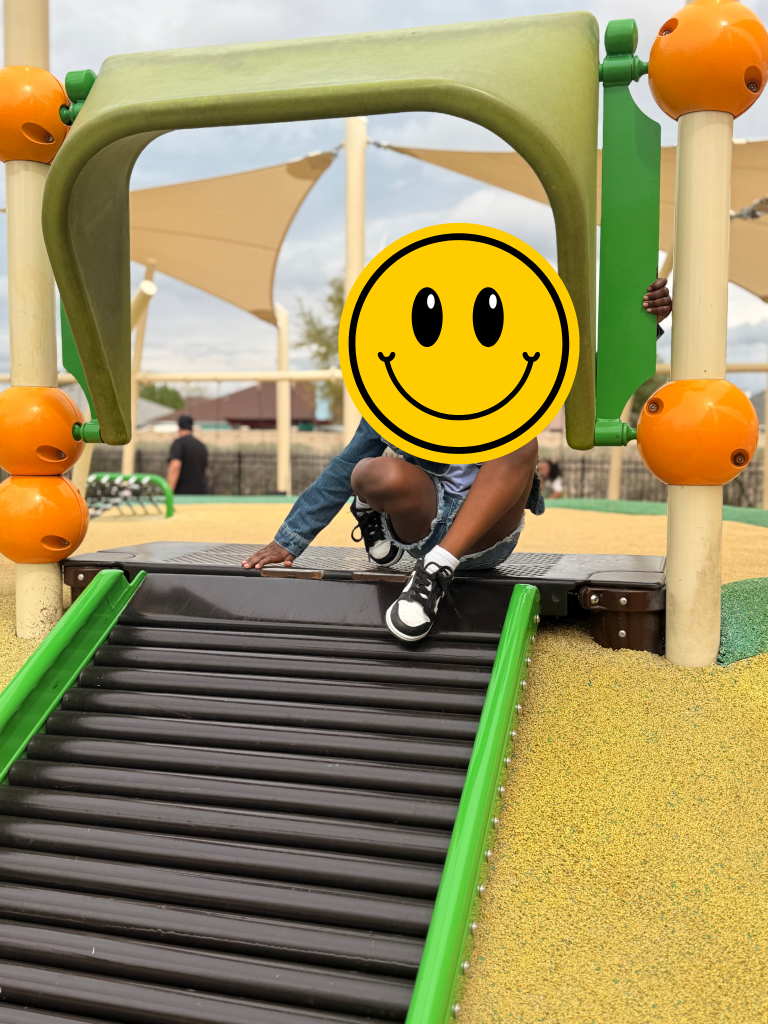
There are times when I don’t feel like driving to the “good” playground so I take my kids to the one 2 minutes from our home. My oldest will play there but before agreeing to go she’ll usually ask, “Mommy, can we go to the big playground? The one with the food trucks?” I’ll respond by telling her I’m tired and we’ll go to the one down the street. “Aw but I like the food trucks. I want frozen yogurt!” Frozen yogurt and food trucks should be available to everyone. Food is a universal need. Why does income dictate food options in our neighborhood? Why does income dictate the quality of play equipment for children? It’s not right. It teaches early in life that some people deserve nice things and others don’t. This is wrong. We are all human beings. We are all God’s children. Resources ought to be shared equitably and one’s race and one’s income shouldn’t matter.
In conclusion, to improve my community I’d focus on increasing access to healthier food and improving play areas for our children. Access to healthier food would increase life spans and the overall health of all people would definitely make my community better. Improving playgrounds to give children an equitable chance to spark their creativity and discover who they want to become would also be a service to our community.
Children learn through play. Their playgrounds should be enticing and conducive to fostering a love of learning. If these changes were made I think we’d see more kids creating things instead of being mindless consumers. I think we’d see kids put the tablets down and beg their parents to take them outside.

 Jeanine Thomas
Leave a comment